Showing posts with label women's fiction. Show all posts

Monday, July 15, 2013

The summer of '67: An interview with Stephanie Gertler, author of Jimmy's Girl


Stephanie Gertler, author of Jimmy's Girl, first released by Penguin's Dutton imprint in 2001, sat down with Istoria to discuss that first critically-acclaimed book, her writing journey, and how she felt as her characters practically dictated the end of their tale to her! Jimmy's Girl is now available in print and digitally from Istoria Books.


IB: Jimmy's Girl 
has an almost dreamlike quality to it, as you switch back and forth between characters and between the summer of 1967 and the later time in which the story is set. How did you create that mood -- was it a conscious choice as you wrote the story or did it flow from the story? 
SG: Switching back and forth was simply part of my thought process as I reflected on the summer of 1967. In my mind, “I was there and I am here.” The juxtaposition of then and now just flowed out of me and came naturally. It was like daydreaming. Defined, daydreaming is fantasy often based upon the mundane – taking real events and, in the case of Jimmy's Girl, looking back and wondering “what if.”  
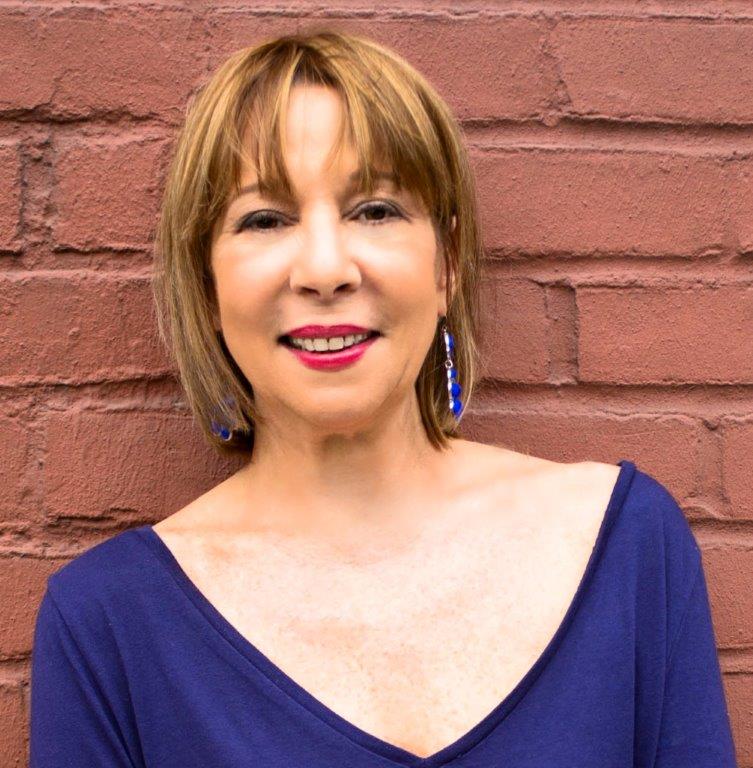
I wrote Jimmy's Girl while I worked as a lifestyles editor and weekly columnist for a newspaper and freelancer for several magazines. I also had three teenagers at home – 13, 15 and 17. No one tells you that you’ll have three teenagers at once when you have three babies in slightly less than four years! The only time for me was in the middle of the night, and so, I wrote Jimmy's Girl (yet to be titled). For fifteen months, I wrote nightly until around three in the morning and then caught a few hours of sleep before the day began. I was running on sheer adrenaline.


Really, I felt as though I was having a love affair as I wrote while the house was silent and everyone slept.   


Writing in the voices of both Jimmy and Emily felt essential. This was a conscious choice.   

IB: The summer of 1967-- when Jimmy and Emily's love was young--is evoked so well in the story. What are your personal memories of that summer, that year?
SG: To this day, the summer of 1967 remains vivid. It was the Summer of Love, and although I was too young to “participate,” I fancied myself a flower child. I wore a metal peace sign around my neck, granny glasses, a poncho and a button that said “Make Love, Not War.” It was also a summer of tremendous unrest as we watched the Vietnam War and race riots on the nightly news, and it felt as though the world was coming to an end. And yet amidst all the chaos, there was a boy who was my first love that summer, and he did enlist in the Marine Corps. He went to Parris Island and ultimately to Vietnam. My parents rented a house that summer, and I recall my room with the adjacent sun porch and the pink canopy bed. At night, I watched the thunderstorms (they came with such frequency that summer) as I wrote letters to my “Jimmy” and read his letters to me over and over again. There are several songs that bring me back to that summer: "Wouldn’t It Be Nice" (The Beach Boys), "My Girl" (The Temptations), "Coming Back to Me" (Jefferson Airplane). Perhaps the most palpable memory from that summer is one of being so purely in love, untainted and innocent, and believing that “Jimmy” and I would be forever.

IB: When you were writing the book, did you have a fixed idea of how Jimmy and Emily's relationship would resolve--whether they'd get back together or not--or did that grow from the story as you wrote it?
SG: This is always my favorite question about Jimmy's Girl. I had absolutely no idea how the book would end until it was in front of me on the screen. As I sat down at my desk to write what I knew would be the last phase of the story, I felt as though Emily and Jimmy were sitting next to me. It was as though they both said, “OK, so now let us tell you what ultimately happened with us,” and I could hear the back and forth in their dialogue as they spoke to me and my fingers flew on the keyboard. As the ending began to unfold on the page, I was choked up. When the ending appeared with finality, I cried.

IB: When the novel was originally released in 2001 by Penguin's Dutton imprint, it was very well received by critics. What did that feel like, to receive this praise for your "baby"?
SG: It’s so interesting that you use the term “baby.”  I’ve often said that writing a book  is an experience similar to giving birth. The book is conceived and then comes the gestational period as I write and then the book is complete and I want to show it to the world. And hopefully, everyone will think it’s a beautiful baby! I was on the edge of my seat as I waited for industry reviews, and it was surreal when Publisher’s Weekly, Booklist and Kirkus came in with raves. You know that expression about “pinching yourself?” Well, I did. What had been written from my heart and soul, as both a catharsis and retreat, became a book. I must say that the consumer reviews, and letters and emails that I received from readers were the most moving and compelling for me. Jimmy's Girl, although fiction, is a deeply personal story.  For strangers to open up to me with accounts of their own first loves and confessions of their own “what if’s” warmed my heart.

IB: Jimmy's Girl was your debut. Could you tell us a little about your writing journey before this novel--had you tried to get anything else published, for example, how long it took to get Jimmy's Girl to an editor and accepted.
SG: From the time I was a little girl, I wrote and made up stories in my head. I had a collection of “foreign dolls,” and when I was around ten, I set up a house for them (a sheet over two chairs) and created a series: All of the girls were in boarding school and they got into all kinds of antics and situations. Jump to college at New York University where I majored in Journalism and minored in English and about a year after I graduated, I landed a job with the Miami bureau of Newsweek Magazine and freelancer for Miami-based publications. A few years later, I came back to New York City and worked as a medical editor. Then came marriage and three babies one after the other – but I always wrote – even if it was just in a journal or stories for my children.

Once my youngest was ensconced in kindergarten, I went back to work at a Connecticut newspaper – starting over again as an editorial assistant which was rather sobering. My kids were in after-school day care until I got home from work, and they were not happy. I promised myself that if I wasn’t promoted to reporter within six months, I’d just throw in the towel and go back to being a stay-at-home mother. I was promoted! And then I was promoted to lifestyles editor and then there was a snow day. Schools were closed and I couldn’t get to work because there was no one with whom I could leave the kids, the oldest of whom was 13. It was 1996 and I was stuck at home with just a phone and a fax. No email back then. And I had an empty front page for my lifestyles section. So, I sat down at the computer (we did have one of those) and wrote a piece called “Pizza Wars” which was about the snow day with the kids. The  piece ran full on the front page and was a huge hit with the readership who wanted more of the same.  Subsequently, my weekly column “These Days” was born and it won a lot of awards from the Society of Professional Journalists.

Three years later, I took a book-load of These Days columns to an agent, Marcy Posner, thinking the columns could become a book.  Marcy called a few days later and said she absolutely loved the columns, but a book wouldn’t work because no one really knew who I was. I was disappointed. Marcy said to write a novel. I told her that I couldn’t – when would I have the time between work and kids and domestic chores? But in September 2000, I sent the manuscript for Jimmy's Girl to Marcy. A week later, she called and said she loved it.  In October, she sent it out to several publishers. I decided not to think about the fact that Jimmy's Girl was “out there.” There was a snowstorm in November, and I was driving when Marcy called my cell. Her voice rang out with her usual, “Hi, Honey! Where are you?” I explained that I was driving and the snow was blinding. She said to pull over. I said that I had all-wheel drive. She insisted that I pull over and I obeyed. That’s when Marcy told me that Jimmy’s Girl was accepted for publication by Dutton in a two-book deal – meaning that I now had to write another novel. I kept slapping my leg and screaming “Get out! Unreal!” She was right to make me pull over before giving me the news! I might have driven off the road otherwise. My editor at Dutton was Carol Baron – the editor for best-selling authors like  Maeve Binchy, Judy Blume, Tracy Chevalier, Harlen Coben, Nicholas Evans, Al Franken, John Grisham, Thomas Harris, John Lescroart, Elmore Leonard, Robert B. Parker, Amy Tan, and Danielle Steel. And me? Amazing. Working with Carol was fantastic.

IB: What happened after the publication of Jimmy's Girl--tell us a bit about your writing life after this beautiful debut.
SG: I completed all pending assignments at the magazines and left my post at the newspaper – only continuing to write These Days. I had to address Novel Number Two. My contract said that it was due within 18 months. Now, Jimmy's Girl took 15 months to complete, and that was while I had a “day job.” Still, I was somewhat daunted by the deadline. I had a vague idea of the plot for the second novel, but I was struggling. I think it was also a case of nerves: Was Jimmy's Girl just a fluke, or was I really a novelist now? I went with a friend to one of my favorite places on the planet – The Adirondacks. I knew that would be the setting for the novel. But still, I was grappling with the “twist” in the plot. And then one night, it came to me – literally in a dream. I woke up with a start at four in the morning, and there was the “twist.” For whatever reason, I had no pad of paper with me (no laptops in those days!), but I did have two large brown paper bags from the local supermarket. I opened them so they were poster size and wrote the synopsis for The Puzzle Bark Tree. When I got home and typed up my script, the synopsis was 42 typed pages. My third and fourth novels, Drifting and The Windmill, were also written on a deadline but, by then, I knew that 18 months was more than enough time to give birth to a book.

IB: Are you still writing? If so, what are you working on?
SG: Oh, yes! When I am not writing, I feel empty. I have been doing quite a bit of ghostwriting which is quite different from writing a novel, but I enjoy it enormously. It is not dissimilar to being in the newsroom, and I often miss those deadlines and the bustling interaction. My last ghostwriting project was Silent No More: Victim 1's Fight for Justice Against Jerry Sandusky (Ballantine) and I am proud to say that it was a New York Times Bestseller. I am also working on my fifth novel. It seems that just when I’m in the thick throes of this fifth novel, another ghostwriting job comes along and I can’t turn down the opportunity!

IB: The book market has changed a great deal in the dozen years since this novel was first published. Do you have any advice for aspiring authors?
SG: It has changed – with the biggest change being the advent of the e-book. At first, I was adamantly opposed to electronic readers and carried as many as five books with me when I traveled. Then I caved and got a Kindle because if I carried that many books, I had to leave too many pairs of shoes at home.  I never thought I’d be able to “curl up” with a Kindle as I could with a book – but I can! However, I always have pen and paper handy so I can take notes as I read since I miss folding the pages over and underlining. I know there’s a way to do that (sort of) on a Kindle, but it’s not the same for me as the touch of paper.

As for advice to aspiring writers: Write what you know and write how you speak. Never fall in love with your words: sometimes a passage might read well, but it simply doesn’t work – so save it for later. And above all, write fearlessly! Most, if not all, fiction has a strong element of truth. Go with the truth and know that fiction can take you to a safe place as you tell your story – and then some.   

___________

Stephanie Gertler's moving tale of lost and found love, Jimmy's Girl, is available in both print and digitally through Istoria Books. It is free today, July 15, 2013 at the Kindle store! If you take advantage of this free offer, please consider penning a review!


During the Summer of 1967, sixteen-year-old Emily Hudson falls in love for the first time with Jimmy Moran just before he enlists in the Marine Corps and heads off to war. When he returns, both Emily and Jimmy have changed, and they go their separate ways. Now, thirty years later, Emily can’t stop thinking about Jimmy and wonders “what if?” Her question is answered when she finds him online. Although they are both married to other people, Emily and Jimmy meet again in Washington, DC, visiting the Vietnam War Memorial together and revisiting their lost love, ultimately having to decide if they deserve a second chance. Told in the alternating voices of Jimmy and Emily, this tender story explores misunderstanding and reconciliation in thought-provoking and poignant ways.

"A tender evocation of lost love, and what it means to find it again." (Kirkus Reviews)

"Sharp-eyed [and] impeccably detailed." (Marie Claire)

"A sweet response to one of life's constant what-if questions." (Booklist, starred review) 

Stephanie Gertler is the author of four novels and one nonfiction book. She lives in New York City with her husband.

Wednesday, July 6, 2011

Addiction, Divorce, Blindness... Romance?
Part II of an Interview with Author Jerri Corgiat

Award-winning author Jerri Corgiat continues her conversation about her wonderful romance series, Love Finds a Home, talking about her inspiration, research and future projects. (For Part One of this interview, click here.)

What was the inspiration for these five wonderful romances?
Author Jerri Corgiat
One of my favorite childhood authors was Janet Lambert. She wrote a considerable number of Young Adult books focused on the fictional Parrish family. Hopefully I don’t get any of this wrong as I haven’t read these since I was a teen. (You know. About ten years ago. Cough.) The first book had a character named Penny Parrish. She was just entering adolescence in that book. By the time there were no longer any new books (or perhaps I’d grown up and moved on), Penny was in her forties. Ms. Lambert had written books about Penny’s siblings, about her siblings’ friends’ families, about their children…

I was an only child. I loved being part of that family, loved revisiting all those characters, particularly since I was experiencing some issues in my home life during those years.

When I started writing romance, the trilogy was the big deal. (Perhaps it still is; I don’t keep up with the trends.) Each of three books usually featured one of three sisters or three brothers. So, I thought, why not just keep writing about different family members and/or their friends over a span of decades? Take Me Home actually features the ex-husband of the heroine of Follow Me Home.

There are about fourteen years of story time between the first and fifth books, so some of the youngsters in the first book, Sing Me Home, are young adults by the fourth book, Home By Starlight.

By the way, most people like reading the books in order, but it’s not necessary. They’ll each stand on their own.

Did you struggle to keep family relationships and history straight through all five books? How did you deal with that?
The relationships weren’t hard to keep straight, no. These people are real to me. Keeping straight their ages—and grades of the children—requires feats of memory I don’t possess.…

So if I lost the detailed, handwritten chart I have for this purpose, any future for this series would be toast!

By the way, in Home at Last, I did get someone’s age confused by a year. And if  you read it carefully enough to compare it with the first two and find the error… don’t write to tell me who it is; I already know.

All the books deal in some way with a serious underlying issue: rehabilitation after drug and alcohol abuse, troubled children, divorce, an affair with a married man, midlife crises, blindness--how did you research these topics?
Addiction and divorce and blindness, oh, my! Wow, reading a list of the issues I incorporate into my stories can make them sound as if they’ll be depressing reads. So let me clarify upfront that they aren’t! They include humor and warmth and, above all, optimism. There are laugh-out-loud moments. How can there not be?  I don’t write perfect characters, and human nature is, simply, often quite funny.

Now, caveat aside… for elements in my books that are outside of my ken (be it blindness or how to weave or adoption law or how to raise chickens and donkeys), I draw on several sources. 

I read copiously, both from the internet and from the library. (Writer’s tip - I often find, for smaller topics, that children’s nonfiction books have just the right amount of information, complete with pictures.)

I call on experts. For example, a weaver educated me on her craft for my heroine’s occupation in Home By Starlight. An optometrist and ophthalmologist, as well as a friend who had experienced serious brain trauma, agreed to interviews for the same book. For Home At Last, with its sub-theme of troubled adolescence, I drew quite heavily on a book by Barbara Bartocci called My Angry Son as well as the very impressive Ozanam organization (www.ozanam.org), whose main campus is located near where I live. They opened their doors to me and shared their mission and stories.

I also rely on personal experience. I’m an alcoholic (soon to hit my 25th anniversary of sobriety) and, like so many, have also dealt with alcoholism as a codependent, so I have some insight into the disease and its effects, wisdom I’ve found in twelve-step programs I can share (without preaching), as well as an education obtained from my own rehab program and those of others. (Anonymity is an important part of those twelve-step programs, so I’ll add that all of the characters in my books are entirely fictional.)

And while I supplemented with research such topics as homophobia, bipolar disorder, abandonment, suicide, disability … caring for aging parents, recalcitrant children, divorce, midlife crises, and  death…these issues have also impacted, if not myself, many people I’m close to and even more that I’m not.  It’s not necessary to look far for insight on these issues!

Still. Even though I try to be careful, as do most authors, unintentional errors creep in, so I hope readers will forgive me any mistakes.

By the way, I like to do this research before the first draft because some small detail may spark an intriguing plot point and there’s an added bonus of meeting many interesting people as I look for experts to question. Also, it’s far easier than writing the first draft.

What I find so impressive about these stories is how well you deal with the serious background issues (mentioned above). You don’t sugarcoat them. Tell me a bit about your decision to handle them realistically.
We all bring some kind of baggage into our relationships, whether we’re young or old. Of course, this baggage is the stuff of conflict and so can form the heart of a book. It seems to me that such issues naturally meld with the story of a developing or changing relationship, be it in a romantic involvement, a friendship, or between family members.

Of equal importance, I like to capture a character’s growth at moments of adversity. It’s interesting to me how people change—and how many people rise to challenges—when faced with events outside their control. (Sometimes I wonder if any of us make major changes without a precipitating event. We get comfortable in our ruts!)

No, I don’t sugarcoat, and as noted above, I try to be accurate—for one main reason. Many readers, including myself, deal or have dealt with some or many of these very real and often life-shattering challenges. I feel an obligation to be as sensitive and accurate to those situations as I can. I am always fearful of trivializing someone’s pain by fictionalizing it.

I do write Happily Ever After books, though, so sometimes I’m resolving issues much more simply and quickly than happens in messy reality.

You live in Kansas but your books are set in Missouri. The descriptions make you want to run out and book a trip to the Ozarks. Did you grow up there? Tell us about your reason for setting the stories there.
I wish there was a place like Cordelia, Missouri, because I’d move there in a heartbeat! The Missouri Ozarks hold a special place in my heart as I spent most of my summers there from the age of ten to college, and then—after our tiny homestead (I’m talking tiny --think of the pink trailer in Follow Me Home!) became mine—the bulk of my son’s summers, as well. The poor abode finally fell apart a few seasons ago, which was actually serendipitous because the course my life has taken since then means I can’t be there as I once was. And, yes, I miss it.

Or rather, I miss what it once was. The lake in the books, Kesibwi, is reminiscent of the Lake of the Ozarks when I first knew it, back when most of the shoreline was undeveloped and fishing resorts held sway; the resorts and large homes and huge boats were the exception, not the norm.

Like Kesibwi is an idealized version of the Lake, Cordelia is an idealized version of a small town in the Ozarks—actually, in a larger sense, of any small town life. As a child, I visited extended family in the small town of Oakland, Nebraska. The fictional settings I created for these books sprang from fond childhood memories of these small towns, unblemished by that later loss of innocence we all experience. 

 
The books were initially published in paperback by Penguin’s Signet line. You must have been overjoyed when you got word from your agent about the first book’s sale. Tell me about that.
I was stunned. Simply stunned. I remembered sitting down hard in a chair at the kitchen table and finally saying, “Tell me what questions I should be asking, because I can’t remember a one of them.” I’d peddled Sing Me Home for over two years, trying to find an agent. Once my agent (I still have her) raised her hand, she sold it in a matter of weeks. I hadn’t expected a sale that fast, if at all!

Are you working on anything right now? If so, would you mind telling us a little about it?
Sure! I’m once again experimenting with a blending of ideas that grew out of my love affair with the Gothic novels of Victoria Holt and her peers long ago. It’s a little bit family saga, a little bit mystery, a little bit romance, and, as it’s set in the 1920s-1940s, it’s also historical.  One of those family-secrets-revealed books. I’m excited about it. My agent would be, too, if I’d only get the danged thing done.

I also have some ideas for future books in the Love Finds a Home series but hesitate to commit the time until I’ve finished my current project. Perhaps audience demand will change my mind. I’m hoping readers will let me know what they think and tell me if they’d like to read more.

And, dipping into a whole ‘nother kettle of fish, I’m also contemplating a creative format for a nonfiction book on alcoholism, codependency and recovery. The trick there is finding something that hasn’t already been done—and done well—umpteen times before me.
_______

The Love Finds a Home series by Jerri Corgiat follows the extended O'Malley clan in Cordelia, Missouri as they confront both life and love challenges. Books in the series include:

  • Sing Me Home-- Lil O'Malley falls for the children of rehabilitated country star Jonathan Van Castle before he has a chance to try to steal her heart.
  • Follow Me Home -- When Alcea O'Malley Addams's husband betrays her, luxury and self-worth go out the window...until an old flame comes into town, leading her to reevaluate her past, her value and her future.
  • Home at Last -- Marigold (Mari) O'Malley returns home to lick her wounds after a big-city career sinks under the weight of a relationship with her boss. Her broken heart begins to mend when she reconnects with a bad boy from her past who teaches her how to trust and take chances at the same time.
  • Home by Starlight -- Widow Patsy O'Malley remains fiercely independent until a broken ankle  and an itinerant musician (from Jonathan Van Castle's band) both knock her off her feet.
  • Take Me Home -- Florida Jones thinks she has the perfect fiance and the perfect life planned until a car accident results in injuries that threaten her sight. An unlikely helpmate guides her to recovery, where she ultimately "sees" the love that is most important in her life.
  •  
    eBooks You Want to Read at Prices You Want to Pay

Monday, June 27, 2011

Abso-Damn-Lutely, Romance Deserves Respect --
Part I of an Interview with Author Jerri Corgiat

Jerri Corgiat is the award-winning author of five romance novels in the Love Finds a Home series. Originally published by Penguin's Signet line in paperback, they are now being released with great pride by Istoria Books. (See end of post for descriptions, or visit www.IstoriaBooks.com)

Jerri Corgiat
Part One of the interview, about writing, publishing and life in general, begins below. 

Did you always want to write romance or women’s fiction?
No! In fact, I was actively avoiding romance because I knew it wouldn’t earn me my rightful place on Oprah. Not that I’m shallow. 

I’m chagrined to admit I was a snob. I had a very skewed idea of what romance writing was. I hadn’t read any romance novels after I’d gone through the so-called bodice rippers of the early 70s, never dreaming what a wide spectrum “romance” had grown to cover.

Anyway, the universe had something different in mind for me, as the universe is often wont to do, also to my chagrin. I got this idea for a love story, and despite my attempts to dismiss it, it wouldn’t leave me alone. I finally broke down and started writing it after reading an interview with bestselling romance author Kathleen Eagle in a monthly Borders’ flyer. The title of the article? I Never Intended to be a Romance Writer. She’d struggled with similar issues as she wanted to be known as A Serious Writer. I don’t think anyone would doubt her books have merit, and she’s certainly experienced some serious success with them. What was good enough for Ms. Eagle was more than good enough for me…

Just don’t ask me how long it then took me to tell anyone I was writing a -- gasp -- romance.

Your books were classified as romance, but, to me, they have a whiff (or more than that!) of women’s fiction to them. What do you consider them? What do you think is the difference between the two genres?
Whenever I see this topic raised, I sure wish they’d all just be classified as “good books!” But, sigh, books are no longer thought of in quite those simplistic terms—at least not by publishers and booksellers.

I’d say romance has its primary focus on a romantic, monogamous relationship; women’s fiction has its primary focus on some passage or event in a woman’s life and may or may not include a romance, too. That sounds simple, but even with those definitions, I often can’t, well, categorically say a book is a romance with women’s fiction elements or women’s fiction with romantic elements. It’s a spectrum – I can only recognize those that fall on one end or the other. The rest is a matter of opinion!

Yes, the Home books land somewhere in the middle. In fact, although there are plenty of highly successful authors who went before me with similar works, writing a crossbreed presented a major hurdle in finding an agent for Sing Me Home, although Sing Me Home is definitely more a traditional romance than the other four.

It’s an unfortunate fact that if print publishers can’t put a label on the spine of a book to identify where it should be shelved in a big box store—and so find the appropriate audience—they aren’t very interested in buying it, if they’re interested at all.  Unfortunate, because I’m absolutely positive that a large number of excellent books have been rejected only because it wasn’t easy to pinpoint a target audience.

Do you think romance deserves more respect from the writing community?
Abso-damn-lutely. And not just by the writing community but by critics as well as the general reading public. Far too often, romance is dismissed as soft porn or as the pejorative bodice ripper or, even sans sex scenes (like they don’t appear in other genres?), as so much fluff.  Yet romance spans the spectrum of all other genres: sci fi, mystery, suspense, historical, romantic comedy, fantasy, inspirational, family saga, series... name any other type of book, and there will be a subset of romance.   

Romances can be dramatic or comic or both, told in first or third person, be rapid-fire page turners or linger on delightful prose.  People display complete and total ignorance of the genre when they throw them all into the same box.
When anyone exhibits contempt for romance, I find it amusing to ask them what movies they’d name as favorites. Rare is even the man who does not include a romance among them… Gone With the Wind. Notting Hill. Jerry Maguire. Titanic. Casablanca. When Harry Met Sally. The Wedding Singer. Something’s Gotta Give. Like Water for Chocolate. Water for Elephants…  It’s more difficult to identify movies that have no romance than those which do.

When did you start writing?
I can’t remember not writing; I did stories and poems and letters—lots and lots of long, long, loooong letters where I exaggerated excerpts from my life. It probably scared people to see my return address appear on the envelope. (Hmm. I still do this. Peruse the archives at www.jerricorgiat.blogspot.com.)  I started my first novel—the one I titled My Learning Curve, which was ultimately consigned to the trash can to spare humanity—in the fall of 1998. I finished the first incarnation (there would be several others) of Sing Me Home, the first book that sold, sometime in 2000.  There was definitely a learning curve! 

Here's an easy question--who are your favorite authors?
Holy moly! Easy question? No way! I read all over the map, and I have an impatient, internal editor. Despite the fact that she’s only one, subjective opinion and not any All-Knowing Authority, she’s grumpy and picky about what she likes. If she’s still nattering away, pointing out flaws or, worse, dozing off  by the time I hit page 50 of any book, then I move on. Any author who gets past her is thus a favorite: someone I’d recommend. As for prioritizing those "favorites," I just couldn’t do it.

There are so many excellent authors and such a cornucopia of books and wide variety of readers... Pretty cool situation, if you think about it.      

Is there any one book you’ve read that influenced you (in life, writing) the most? 
A book called Building Your Field of Dreams by Mary Manin Morrissey. Close second: The Artist’s Way by Julia Cameron. I spring from a New Thought mentality.


What was the hardest part of writing the Love Finds a Home books?
It involved writing books. 

Seriously, my husband and I were talking the other day about why I frequently procrastinate with writing. Yes, I enjoy it, much as anyone enjoys any job they love, but if it was a friggin’ breeze, I’d have no trouble getting and keeping my rear in the chair. Writing a book is not easy!

(Don’t believe me? Try it!)

Author Jennifer Lawler recently said, “Every time I finish writing a book, I wonder how I did it and why I’d want to do it again. And then amnesia sets in.”  That is so true.

Your books were published before the e-book revolution started, so publishing has changed since your first sale. What advice would you have for writers trying to break into the business today?
Run for the hills!

Okay, seriously. Big discussion for little space, but I’ll give it a try:

If you haven’t finished a manuscript, don’t worry about it now. You can’t sell what you don’t have. Besides, with the rapid changes taking place in the industry, whatever you decide now is not likely to apply later.

If you already have a manuscript ready for market, you have a difficult decision to make.

Print publication still garners advances, often good (and sometimes even stellar) advances. So that’s guaranteed money with distribution into all or most major outlets (some publishers are much better than others).

On the downside, print publishing contracts are difficult to get, and it can take months—even years—to land one. That doesn’t mean give up, if that’s your goal. I had a stack of agent rejections three inches high before I made my first sale. Maybe that last query didn’t do it—but it might be the next one.

Also a consideration: royalties on ebooks in print contracts (yes, print publishers will want both rights) tend to be onerous: small royalties and no end in sight for rights reversion (which is an issue I won’t go into here, but it’s an important one).

With epublishing, by contrast, while you’ll eschew any advance, you’ll start collecting a percentage of sales—in a timely manner. (Believe me, there’s little in the traditional publishing world that’s timely.) And those sales can be the gift that keeps on giving: No books need go “out of print.” On the internet, books can live forever.

Independent epublishing is an easy nut to crack. Format, upload, and voila! You’re a published author. But therein also lies its thorniest problem. Most readers lack the patience to sort through the multitudes of available ebooks. Instead, they are increasingly relying on sites like dailycheapreads.com and goodreads.com to sort out the wheat from the chaff.

I find this exciting—readers are becoming the gatekeepers instead of traditional publishers.

But getting the word of mouth to rise to the top in a crowded field is also tough. It’s always been hard; now it's even more so. (And if any author had this mastered, we’d all have stopped writing long ago and made our fortunes presenting seminars—to other writers.)

So that’s where the new breed of independent epublishers comes into play, with their editorial staff who are selective about which authors—new or established—they’ll represent. 

I’m treading into these waters via Istoria, my ebook publisher. I know the principals of this company, know their dedication and professionalism and zeal where promotion is concerned. (A zeal that’s as lacking as timeliness in the traditional publishing world.)  I’m betting my books that someday in the not far distant future, readers will recognize the Istoria brand as one they can depend on for a good book.

For Part II of this interview, click here.

__________________

The Love Finds a Home series by Jerri Corgiat follows the extended O'Malley clan in Cordelia, Missouri as they confront both life and love challenges. Books in the series include:
  • Sing Me Home-- Lil O'Malley falls for the children of rehabilitated country star Jonathan Van Castle, leading to a marriage of convenience while he fights a custody battle ... and eventually fights for her heart.
  • Follow Me Home -- When Alcea O'Malley Addams's husband betrays her, luxury and self-worth go out the window...until an old flame comes into town, leading her to reevaluate her past, her value as a woman and her future.
  • Home at Last -- Marigold (Mari) O'Malley returns home to lick her wounds after a big-city career sinks under the weight of a relationship with her boss. Her broken heart begins to mend when she reconnects with a bad boy from her past who teaches her how to trust and take chances at the same time.
  • Home by Starlight -- Widow Patsy O'Malley remains fiercely independent until a broken ankle  and an itinerant musician (from Jonathan Van Castle's band) both knock her off her feet.
  • Take Me Home -- Florida Jones thinks she has the perfect fiance and the perfect life planned until a car accident results in injuries that threaten her sight. An unlikely helpmate guides her to recovery, where she ultimately "sees" the love that is most important in her life.